

type
status
date
category
slug
summary
Pinterest Topic
Pinterest Tag
Latest Pin Date
Latest Pin No.
Pin Image
Total Pin Images
All Pins Posted
All Pin Images Created
tags
icon
password
comment
At the turn of the millennium, the music world wasn’t just busy—it was split. Right down the middle. Two five-piece groups with crisp dance moves, fans who’d defend them to the death, and songs that’d get stuck in your head for weeks. This isn’t just about Backstreet Boys vs. *NSYNC. It’s about that time in your teens when your bedroom wall posters weren’t just decor—they were a declaration. You had to pick a side. No middle ground. None. And whoever you chose? It said everything. Like, everything.

For so many of us, this wasn’t background noise at the grocery store. It was the soundtrack to your first “do you like me?” note, the awkward slow dance at your 8th grade formal, the entire messy, wonderful blur of adolescence. Hear the first few notes of “I Want It That Way” and suddenly you’re 13 again, at the roller rink, pizza grease on your jeans, floor wax sticking to your sneakers. Or “Bye Bye Bye” comes on? Next thing you know, you’re grabbing your hairbrush microphone, your best friend beside you, trying (and failing) to nail every move from the video. These weren’t just songs. They were little time capsules. Open ’em up, and you’re right back to who you were.

The rivalry? It was everywhere. Whispers in the school hallway (“Did you hear *NSYNC dissed BSB in an interview?”—spoiler: they didn’t, but we believed it). The daily countdown on MTV’s Total Request Live (TRL)—which felt like a national election. Radio airplay wars. Arguments with your once-best friend who dared to wear an *NSYNC shirt to your Backstreet-themed sleepover. Were you team smooth, romantic Backstreet? Or team edgy, dance-till-you-drop *NSYNC? For three, maybe four years? It felt like the most important choice you’d ever make.
A Breakdown of Two Distinct Sounds
At first glance, yeah, they looked similar. Both from Orlando. Five guys. Built for pop stardom, like someone had mixed charisma, vocal chops, and teen appeal in a blender. But if you were a real fan? You knew the difference was in the music. Like, deep down in the chords. It wasn’t just faces—it was sound. And that sound defined your tribe.
Backstreet Boys showed up first to the U.S. party, and they built their vibe on that polished, R&B-kissed pop. Smooth. Romantic. Think “I Want It That Way”—that song’s all soaring harmonies and that earnest “you are my fire” line that made you blush even if you didn’t have a crush yet.

Or “As Long As You Love Me,” with its soft beat and promises that felt like they were just for you. A lot of their stuff came from Swedish pop genius Max Martin—guy knew how to mix American R&B warmth with that catchy European pop spark. The result? Music that felt both classic and new. Like a hug in a song. The kind that made you daydream about a grand romance, even if your only “date” was sharing fries with your lab partner.

Then there’s *NSYNC. They could do a ballad—c’mon, who doesn’t remember getting teary to “(God Must Have Spent) A Little More Time on You”?—but their bread and butter? Energy. Sharp, unapologetic, turn-the-volume-up pop. They leaned hard into up-tempo tracks that felt made for dance floors and car stereos cranked to 11. Syncopated beats. Electronic little flourishes. That “can’t sit still” vibe that’s impossible to ignore.

Their big moment? The 2000 album No Strings Attached. The title alone screamed “we’re doing our own thing now,” and the music delivered. Lead single “Bye Bye Bye”? It wasn’t just a song. It was an event. That staccato beat. Those driving synths. The way Justin Timberlake hit those high notes? It blasted from every car in the mall parking lot. It echoed through school hallways between classes. It was the anthem for every kid who’d ever wanted to say “enough” to something (even if that something was just a bad math test). They weren’t just singing about love—they were building these bold, future-looking pop soundscapes. Here’s the kicker: Backstreet serenaded you. *NSYNC made you jump off the couch. Choosing was choosing between two kinds of perfect: timeless romance or electrifying rhythm.
A Contrast in Choreography and Style
This fight wasn’t just on the radio. It was on your TV screen. Music videos were the arena, and choreography? That was their weapon. And man, did these two groups carve out their own lanes. Visual moments that still pop into your head when you hear the songs.
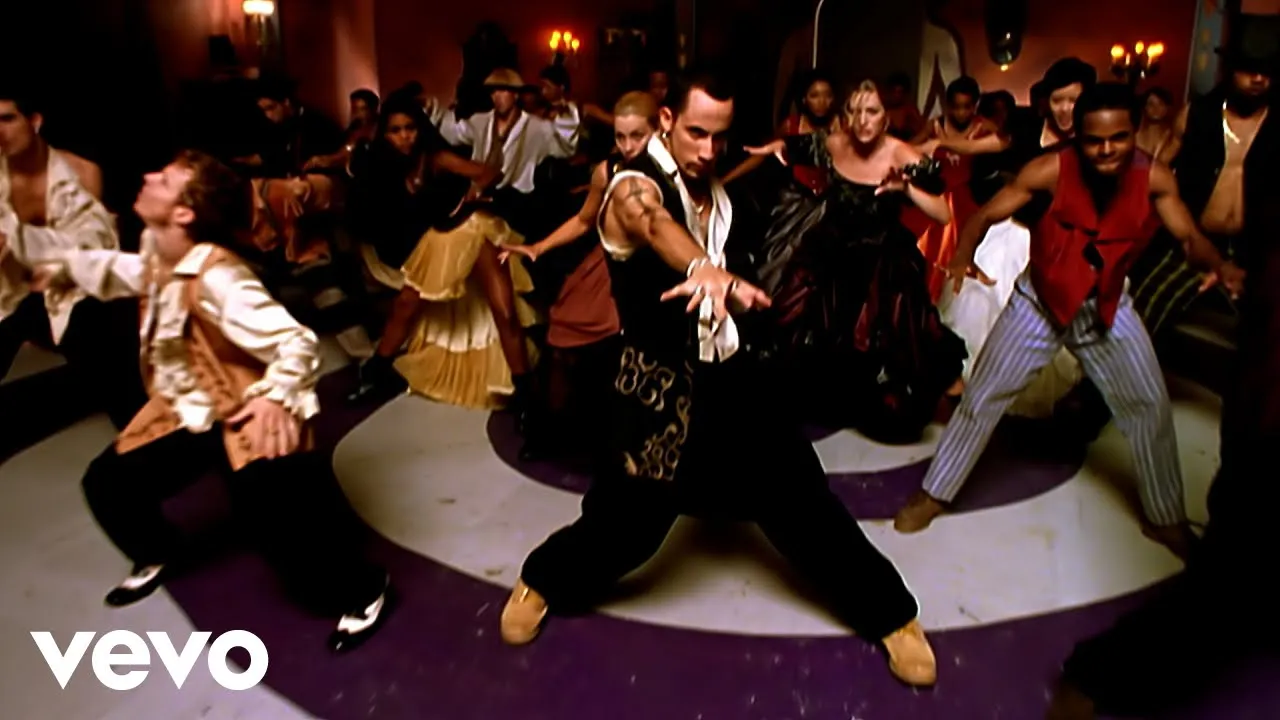
Backstreet’s style? Cool. Smooth. Like they didn’t even have to try (even though you know they practiced for hours). Their dances were tight, synchronized, but with that effortless sophistication. Take “Everybody (Backstreet’s Back)”—that horror-themed video with the dance break? Legendary. The moves were sharp, unified, perfect for that gothic-pop vibe. But the real icon? The chair routine in “As Long As You Love Me.” So simple, but so good. Five guys, sitting down, doing these slick little moves in time with the beat. It looked easy. Spoiler: It wasn’t. My friends and I tried to copy it in my living room once. Chairs got knocked over. Someone face-planted. We gave up and ate ice cream. But that’s the point—Backstreet made precision look like second nature. Quiet confidence. That’s their thing.
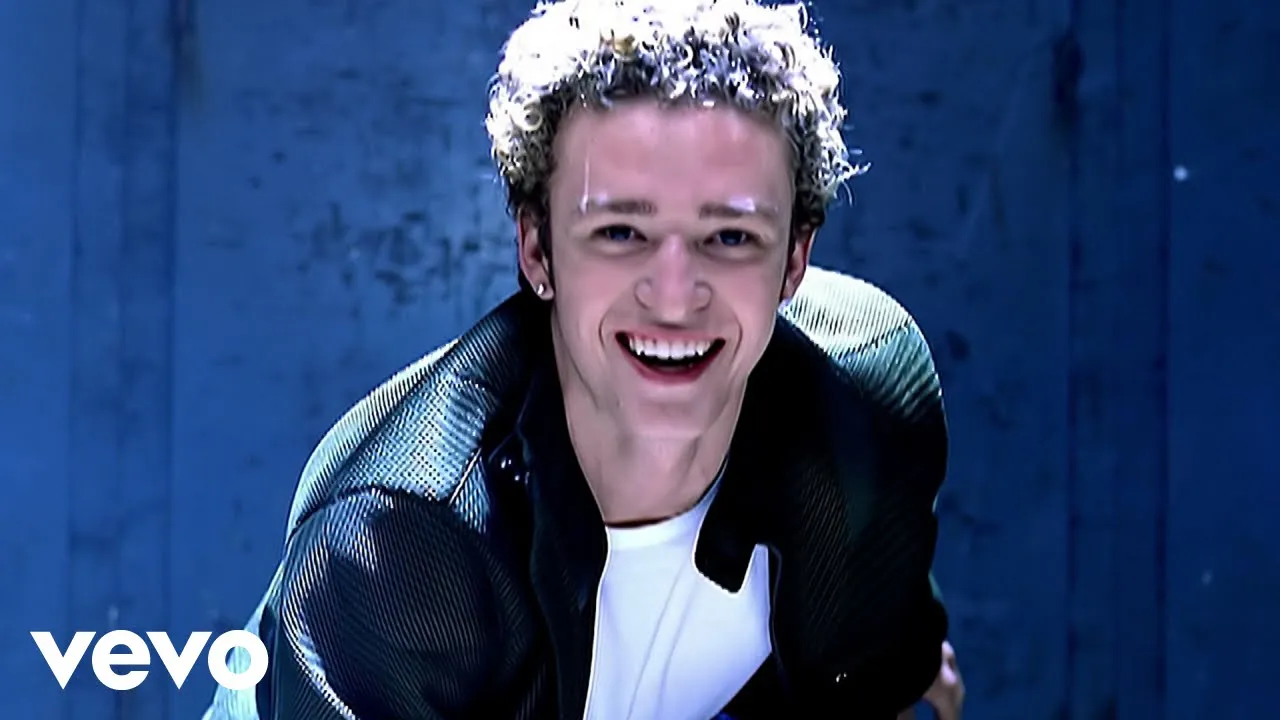
NSYNC? All explosion. Their choreography was bigger, more athletic, like they were trying to grab your attention before the first verse even started. And no video did that better than “Bye Bye Bye.” The whole puppet-on-strings concept? Genius. Then the chorus hits, and that dance? Iconic. The sharp, marionette arm moves. The “talk to the hand” gesture. The jumps that looked like they required actual gym class skills. Darrin Henson choreographed that, and it’s so them—fast, intricate, full of swagger.
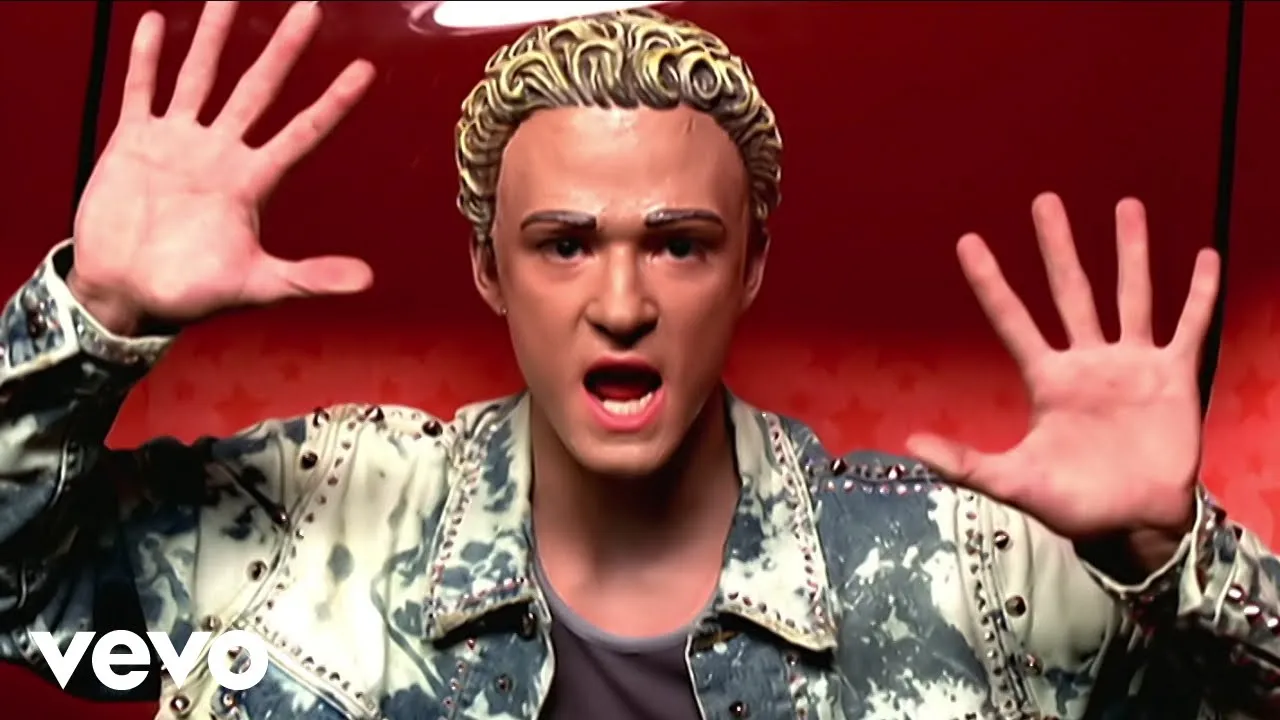
Where Backstreet was smooth, *NSYNC was sharp. Where BSB was romantic, *NSYNC was powerful. Their videos got weird, too—remember the doll versions of themselves in “It’s Gonna Be Me”? They didn’t care about playing it safe. Playful. Experimental. The choice came down to what hooked you more: that “I could never pull that off but it looks cool” Backstreet vibe, or *NSYNC’s “in your face and impossible to ignore” energy. Both stuck. Hard.
The Fan Armies and the War for the Charts
This wasn’t some fake feud cooked up by record labels. For fans? It was personal. Team Backstreet or Team *NSYNC—your loyalty was part of who you were. This was before TikTok or Twitter, but make no mistake: the fan armies were organized. And they had battlegrounds. TRL phone lines. Record store lines on album release day. Lunch tables, where debates got so heated you’d stop sharing your chips.
Being a fan back then was immersive. Like, fully immersive. You’d save your allowance for weeks to buy their new CD, then spend an hour unfolding the booklet to read every lyric, every thank-you note (you memorized their “shoutouts” to their moms, don’t lie). Your bedroom wall? Plastered with posters torn from Teen People or BOP—you’d tape over the edges so your mom wouldn’t yell about the walls. You’d set your VCR to record their TRL appearances, then rewatch the interviews so many times the tape got fuzzy. You knew their birthdays. Their favorite colors. The random fact that Nick Carter hated broccoli. It wasn’t just liking music—it was feeling like you were part of their world.
The charts? That was the scoreboard. TRL’s daily countdown? It was appointment TV. After school, you’d grab the phone and dial until your finger hurt, just to vote for your band’s video. Seeing them at number one? Pure triumph. Like your team won the Super Bowl.
But the real showdown? Album releases. May 1999: Backstreet drops Millennium. It was a monster. Sold 1.13 million copies in the first week—unheard of back then. Became the best-selling album of 1999. For a minute, Backstreet felt untouchable. The kings of pop.
.jpg?table=block&id=279b5dc8-d074-8088-a754-cfc32156b3e6&t=279b5dc8-d074-8088-a754-cfc32156b3e6)
Then March 2000 happened. *NSYNC had just fought a messy legal battle to get out of their old management—we all talked about that like it was a soap opera. Then they dropped No Strings Attached. The hype? Through the roof. And the fans? They showed up. 2.4 million copies in the first week. Shattered Backstreet’s record. Held that title for 15 years. Became 2000’s best-seller.

That back-and-forth? That’s what made the rivalry sing. It was tangible. Numbers. Records. Bragging rights. I remember arguing with my friend Sarah—she was Team *NSYNC, I was Team Backstreet—for hours after those sales came out. We didn’t speak for a day. Then we made up over a shared pack of Starbursts. Because that’s what teens do.
Both groups had hits. Iconic moments. Legacies that still make us smile when their songs come on the radio. But the question that defined a generation? Still hangs in the air. Which boy band was the greatest? C’mon—state your allegiance. I won’t judge. (Okay, maybe a little.)
上一篇
The Art of the Hard Sell: Deconstructing the 90s Infomercial
下一篇
Deconstructing a Universe: The Genius of the DCAU
Loading...


.jpeg?table=block&id=281b5dc8-d074-8091-af61-d532a267112f&t=281b5dc8-d074-8091-af61-d532a267112f)

