
.jpeg?table=block&id=281b5dc8-d074-8091-af61-d532a267112f&t=281b5dc8-d074-8091-af61-d532a267112f)
type
status
date
category
slug
summary
Pinterest Topic
Pinterest Tag
Latest Pin Date
Latest Pin No.
Pin Image
Total Pin Images
All Pins Posted
All Pin Images Created
tags
icon
password
comment
Let me ask you something—when does your holiday season actually start? Not the first time you walk past a Target in October, where Christmas trees are propped next to Halloween candy (c’mon, stores, let us carve pumpkins before we hang tinsel! Last year I swear I grabbed a bag of mini Snickers and a Santa mug off the same shelf. Felt like time had hit fast-forward on fall without asking—like, is it even November yet, or did we skip straight to eggnog season?). Not when you hear that pop star’s overproduced “Jingle Bells” cover for the 50th time—the one that sounds like they blended glitter, a foghorn, and way too much Auto-Tune, like they were trying so hard to go viral they forgot to make it sound nice. For millions of us? It’s those first few soft, kinda melancholy piano notes.

You know exactly what I’m talking about. You’re in the grocery store, fumbling with a carton of extra-large eggs. Your cousin’s bringing her kids—those little ones eat pancakes like they haven’t had food in a week. You’re also holding a half-loaf of sourdough, and it’s slipping out of your hand.
Then—boom. They hit. You pause mid-step. Your thumb stops scrolling that sugar cookie recipe on your phone. Let’s be real—you were gonna skip half the steps. Who has time to chill dough for 24 hours?
And for a second? You’re not between the cereal and milk anymore. You’re back on grandma’s couch. Fuzzy socks up to your knees, heat so high your cheeks feel pink. You’re watching Charlie Brown mope over that sad little Christmas tree.
That’s the magic of the A Charlie Brown Christmas soundtrack. It’s an unexpected jazz piece. It didn’t just become the sound of holidays—it became a feeling. Like coming home after a long drive to your mom’s chocolate chip cookies. They’re still warm, still smell like vanilla, crumbs stuck to the parchment paper.
And honestly? It almost never happened. Let me tell you the story.
The Genesis of an Unconventional Score
It all started with a drive over a bridge. Think 1963. Television producer Lee Mendelson is going across the Golden Gate Bridge. Radio’s on. Wind’s messing up his hair. He’s thinking about a documentary. It’s for Charles M. Schulz and his Peanuts comic strip.

That time felt heavy. JFK had just passed. The air had this quiet, tired tension—like a broken heater that won’t stop rattling. You know that feeling? When everything’s a little off. Like you’re walking through molasses. And you just want something that doesn’t feel forced.
Mendelson probably wanted that. Something light, but not silly. Not the kind of fluff that makes you roll your eyes and change the channel. Something real. The kind that makes you go, “Yeah, I get that.”
Then a song came on. “Cast Your Fate to the Wind.” It’s a breezy jazz tune. Sounds like sunlight through oak leaves on a lazy Sunday. Not too loud. Not too flashy. Just nice.
Mendelson stopped. Like, really stopped. I like to imagine he pulled over to the side of the road. Hazard lights blinking. Just to listen.
Because this, he thought, is exactly what Peanuts sounds like. Grown-up enough for Charlie Brown’s little worries (let’s be real— that kid’s got more stress than a college student during finals. Will anyone sit with me at lunch? Is my tree too small? Why does Snoopy get all the attention?). But fun enough to make you grin when Snoopy does dumb stuff. Like wear a top hat and dance on his doghouse.

The guy behind that music? A San Francisco jazz pianist named Vince Guaraldi. Mendelson was a jazz fan—probably had a stack of records by his turntable, the kind with coffee stains on the sleeves and a scratch or two from being played so much you forget to be gentle with them—and he tracked Guaraldi down fast. No waiting for agents to call back, no endless email chains where everyone says “circle back later.” Just, “Hey, I love your work—want to score a Peanuts doc?” Guaraldi said yes, no hesitation. No big contract fights, no “let me check my calendar with my team”—just a musician excited to work on something that felt fun. That’s the good stuff, right? When you say yes to something just because it clicks, not because of the money or the fame.
A few weeks later, Mendelson’s phone rang. It was Guaraldi. He sounded like he couldn’t hold it in—like a kid who found a secret spot for Halloween candy and can’t keep quiet.
“I just wrote something,” he said. “I need to play it for you right now—before I forget.”
Can you imagine that? Guaraldi sitting at his piano. Holding the phone up to the keys. Plinking that bouncy tune you know right away—“Linus and Lucy.”
No fancy recording stuff. No backup band. Just a guy and his piano, sharing what he made ‘cause he couldn’t wait.
I bet there was static on the line. Maybe a dog barking in the background. But Mendelson heard it and knew. No second thoughts. No “let’s tweak this chord.”
That was Peanuts. That was the sound of Charlie Brown tripping over his feet in the snow. Of Linus clutching his blanket like it’s the only thing that keeps him safe. Of Snoopy stealing the show at the Christmas play.
But here’s the first twist: the documentary never aired. No sponsors stepped up—maybe they thought a Peanuts doc was too “small,” too “quiet,” not “exciting” enough for TV (because nothing says “exciting” like car chases, right?)—and it got shelved. Mendelson must’ve been gutted. I get that feeling. Once, I spent three months making a photo album for my best friend’s wedding: printing photos of their first date at a taco truck (he spilled salsa on her white shirt—she still has it, stained and all, and teases him about it every anniversary), gluing in ticket stubs from the concert they went to, writing little notes next to each picture about why that moment mattered. Then two days before the wedding, the printer messed up—all the photos came out blurry, the pages stuck together like they’d melted. Total heartbreak. You pour so much of yourself into something, and then it just… fades away. Like you never even tried.
But funny how life works. Two years later, in the spring of 1965, The Coca-Cola Company called. They wanted a Peanuts Christmas special. And Mendelson’s first thought? “Vince. Obviously.”
They had six months. Six months to write, animate, and score an entire holiday special. That’s not just wrapping presents the night before Christmas—that’s like planning a full Christmas dinner (turkey, stuffing, gravy, green bean casserole, three kinds of pie) for 15 people… and realizing you forgot to buy the turkey until 5 PM on Christmas Eve. Chaotic. Stressful. The kind of thing that makes you stay up until 2 AM Googling “how to thaw a turkey fast” while drinking cold coffee. But when you care enough? You make it work. My sister planned her entire wedding in three months once—insane, right? She was up until midnight every night addressing invitations, picking flowers, arguing with the caterer about whether mac and cheese belonged at a wedding (it does, by the way—fight me. She ended up serving it in little cast-iron skillets, and it was the first thing gone). But she pulled it off because she wanted it to be her day. That’s what Mendelson and Guaraldi did. They cared more about getting it right than getting it done fast.
Guaraldi jumped back in. What he made was crazy for that time. It mixed jazz and old Christmas songs.
No cartoon had used jazz like that before. Back then, kids’ cartoons had loud, peppy orchestra music. Think trumpets so loud they hurt your ears. Flutes trilling like they’re in a rush. Nothing that made you lean in and go, “Wait, that’s actually good.”
Schulz loved the idea. He wanted the special to feel classic—Christmas carols!—and fresh—jazz!—too. Like wearing a vintage sweater your grandma knit with new sneakers. Guaraldi pulled it off.
Guaraldi recorded most of the album with his trio: bassist Fred Marshall and drummer Jerry Granelli. The sessions ran late into the night, full of experimentation—tinkering with a melody until it felt like a hug, trying a new rhythm just because, laughing when a note went wrong (I’ve done that with baking—added too much sugar, burned the cookies, and laughed because they still tasted like happiness). For tracks like “Christmas Time Is Here” and “Hark! The Herald Angels Sing,” they brought in a kids’ choir from St. Paul’s Episcopal Church.
Imagine being those kids? Staying up past your bedtime, standing in a dark studio with big microphones that look like alien heads, and getting ice cream as a reward. I would’ve begged my parents until they caved. “Please? I’ll do the dishes for a month! I’ll stop stealing my brother’s video games! I’ll even eat my broccoli—all of it!” That’s the kind of small, sweet detail that makes this soundtrack feel real. Using actual kids’ voices—for the songs and the characters—was another risk. What if they sounded off-key? What if they got shy and froze up, like when you have to sing “Happy Birthday” in front of a crowd and your voice cracks? But it paid off. It gave the special this quiet charm that felt like… well, like real life. Kids aren’t perfect. They mumble. They sing too loud. They forget the words and make up new ones. That’s what makes them endearing. My niece sings “Silent Night” with a lisp—she says “night” like “nite” and “star” like “staw”—and it’s the best version I’ve ever heard. Perfect is boring. Perfect doesn’t feel like home.

Not everyone got it, though. When Mendelson showed the finished special to CBS executives? They hated it. Too slow, they said. Jazz was wrong for a kids’ cartoon (as if kids can’t tell good music from bad—please, my 5-year-old cousin knows when a song slaps; she’ll dance to it or cover her ears and yell “no!” like it’s her job). And it was too religious—Linus quoting the Bible? “Too heavy,” they complained. One exec even said, “Well, it’s going on next week. There’s nothing we can do about it”—then predicted it’d be the first and last Charlie Brown show. Ouch. That’s like telling someone their homemade cookies taste bad—even if it’s true (which it wasn’t, in this case), you don’t say it like that.
Even Mendelson and animator Bill Melendez started second-guessing themselves. “Did we ruin Charlie Brown?” they wondered. I’ve been there. I once wrote a poem for my grandma for her 80th birthday—about her garden, the way she makes tea with just a splash of honey, how she always saves me a piece of pie—and then spent an hour panicking: “Is this cheesy? Will she think it’s stupid? Should I just get her a scarf instead?” It’s the worst feeling—doubting something you poured your heart into, like you’re not good enough to tell that story. But they put it out there anyway. Good thing they did.
A Breakdown of a Jazz Standard
This soundtrack’s special for one big reason: it doesn’t act like christmas is only sparkles and happy noise. it mixes joy and sadness—just how the holidays feel for a lot of us.
Some years, christmas is loud. kids run around. cookies burn in the oven (guilty—last year i left them too long. they turned into hockey pucks. my dad still teases me about it). everyone talks at once. the dog steals ham off the table.
Other years, it’s quiet. you think a lot. maybe even feel a little down. you might miss someone—like my grandpa. he loved putting up the tree, but he’s not here anymore. or things didn’t go right. you lost your job. a friend canceled. the turkey burned.
This music gets that. it doesn’t look away from the messy, real parts of the season. it sits with you through them.
Two songs stand out most here. they’re nothing alike: “christmas time is here” and “linus and lucy.” let’s start with the first.
“Christmas time is here” started as just piano. soft. slow. like sitting by a window watching snow fall, with a mug of hot cocoa (extra marshmallows, obviously. the kind that melt and make the cocoa frothy. you have to blow on it before every sip—or you’ll burn your tongue).
But as the air date got closer, mendelson thought, “we need lyrics.” so he grabbed an envelope. not a fancy notebook. not a laptop with a nice app. remember, this was 1965—no ipads or notes apps. he scribbled a poem in 15 minutes. “christmas time is here, happiness and cheer.” simple. no big metaphors. no tricky rhymes. just… honest. but man, it hits hard.

Hear guaraldi’s soft piano with those kids’ quiet voices? it’s like wrapping up in a warm blanket that still smells like your childhood. like your mom’s laundry soap. or the pine from your first christmas tree (the one that dropped needles all over the carpet. my dad grumbled, but he still helped me hang the star—even after he pricked his finger).
It’s nostalgic, but not cheesy. it feels like that quiet peace on christmas morning, before anyone else wakes up. the tree lights are on. the house is quiet except for the furnace humming. you can just breathe.
I used to do that, y’know? wake up at 6 am. tiptoe to the tree. sit there alone for 10 minutes. no noise. no rush. just me and the presents (i’d shake the small ones—don’t tell anyone. once i ruined a surprise by shaking too hard. i heard a toy rattle).
Those moments? they’re the ones i remember most. last year, i did it with my niece. she’s 6. she sat next to me, whispering, “do you think santa ate the cookies? i left him extra chocolate chips… and a note.” it was perfect.
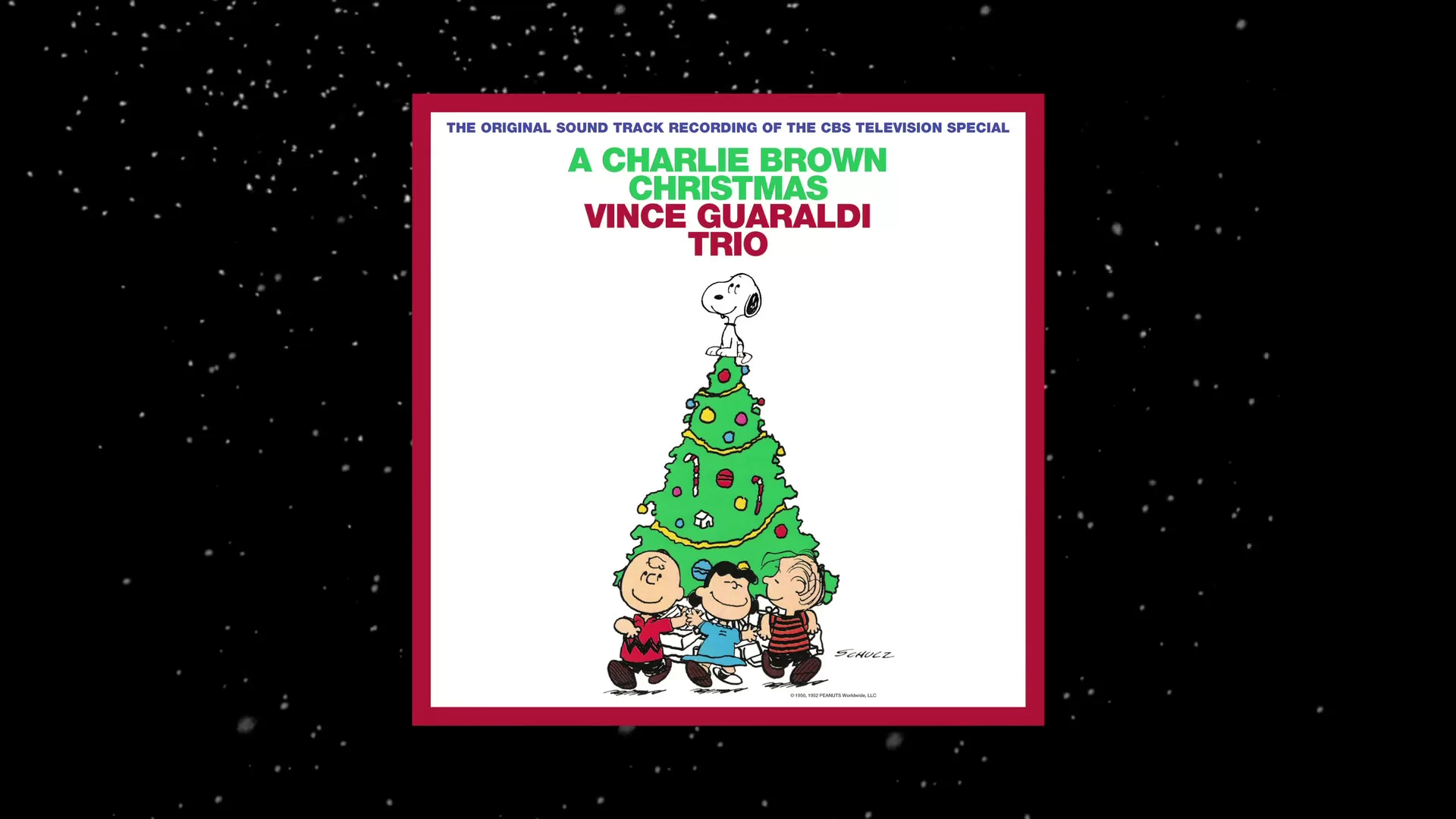
Then there’s “linus and lucy.” you know this song—even if you think you don’t. that bouncy, jumpy rhythm that makes you wanna tap your foot. or dance like a peanuts kid (wild. no cares. arms flailing. like you don’t worry about looking silly).
It was originally written for a documentary that never aired. but now? it’s basically the theme song for all peanuts stuff. schulz loved it so much, he told the animators to make a whole scene just for it. the famous dance part in the christmas special. snoopy spins around the dance floor like he owns it. his top hat’s lopsided. his tail wags so hard, his whole body shakes.
I still catch myself humming it when I’m wrapping presents. Last year, I was folding wrapping paper (the kind with snowflakes that kept sticking to my fingers—thanks, static electricity) and realized I was doing the Snoopy dance a little—you know, the one where he bobs his head and spins in circles, like he’s the happiest dog alive. My dog, Max, looked at me like I was crazy—ears perked up, head tilted, as if to say, “What are you doing? And why aren’t you giving me a treat?” Worth it. It’s that kind of earworm—simple, but impossible to forget. I even caught my dad humming it while he was fixing the Christmas lights last December. He tried to play it off, saying, “Oh, it’s just stuck in my head,” but I saw him smiling. Dads never admit they like the silly stuff, but we know.
But Guaraldi didn’t stop there. He took classic carols like “O Tannenbaum” and “What Child Is This” and gave them his West Coast cool jazz twist—his signature style. Suddenly, songs i’d heard a million times at church or grandma’s house felt new. Like putting fresh paint on an old chair you love. The kind with scratches, but still feels like home.
His improvisations are subtle. Nothing flashy. No 10-minute piano solos that make you zone out—i’m looking at you, those jazz songs that drag on forever, and you’re just waiting for them to end.
Just little touches. They turn a simple carol into something sophisticated. Like adding a dash of cinnamon to hot cocoa. It doesn’t change the drink, but it makes it better.
And using a real jazz trio? Piano, bass, drums? Back then, that was revolutionary for a TV special. It introduced jazz to a whole generation of kids—myself included. I didn’t know what jazz was until I heard this soundtrack. I thought it was just “music for grown-ups who drink wine and talk about art” (no shade to those grown-ups, by the way—wine and art are great). Now? I put on Guaraldi’s albums when I’m cooking (spaghetti night, mostly—something about the piano makes the sauce taste better, I swear) or just hanging out, reading a book. Thanks, Charlie Brown. You taught me to like “grown-up music.”
The Album's Lasting Imprint on Holiday Culture
Remember those CBS execs who thought the special would flop? Yeah, about that. A Charlie Brown Christmas aired on December 9, 1965. Nearly half of America watched it. Half. That’s like everyone you know—your neighbors, your cousin in Texas you only see at Thanksgiving, your third-grade teacher who used to read Peanuts comics to the class after tests—sitting down at the same time to watch a cartoon. Insane. These days, nothing gets that many viewers. Even the Super Bowl doesn’t hit half the country anymore. It won an Emmy. A Peabody. And the soundtrack? It became a blockbuster. Sold over five million copies in the US. Got inducted into the Grammy Hall of Fame. Even added to the Library of Congress’s National Recording Registry. They said it’s “culturally, historically, or aesthetically important.” Fancy words for “this music matters. Like, really matters.”
But why? Why does this quiet, sometimes somber album still feel essential, even 60 years later? I think it’s because it’s honest. The soundtrack isn’t trying to be a big, flashy holiday hit—you won’t hear it at a party where people are dancing on tables (okay, maybe one table, if it’s a really chill party with hot cocoa instead of cocktails). It’s understated. Heartfelt. Genuine—just like Charlie Brown. It gets that Christmas isn’t always perfect. Sometimes you’re lonely. Sometimes you’re stressed about buying gifts (I once spent three hours at the mall trying to find a present for my uncle—he likes “tools” but I don’t know the difference between a wrench and a socket—and left with nothing but a coffee and a headache). Sometimes you feel like everyone else is having a better holiday than you—like their tree is bigger, their cookies are better, their family is happier. But there’s hope there, too.

The music made the show sound grown-up. And it worked for both kids and adults.
My mom loves “Christmas Time Is Here.” It reminds her of her childhood—sitting on her dad’s lap, watching the special. He’d tell her, “See? Even Charlie Brown finds joy.”
I love that song too. It reminds me of her—hearing her tell that story, smiling like she’s right back there. Like she’s 7 again, with her dad’s arm around her.
That cartoon became something more because of it. It’s a story about looking for what Christmas really means. Even when everything feels too commercial—like stores selling Christmas stuff in September. Before we’ve even had pumpkin spice lattes… don’t get me started.
Guaraldi’s score didn’t just background the action—it became the emotional heartbeat of Peanuts. You can’t think of Charlie Brown moping around a sad little Christmas tree without that soft piano. You can’t picture Linus holding his blanket, standing in front of the gang, quoting the Bible without that quiet build-up—like the music is holding its breath right along with you. He did something rare: he made music that’s inseparable from the characters, from the feeling of the holidays. And he introduced jazz to people who might never have listened to it otherwise. I’ve met musicians who say this soundtrack is why they started playing piano—they heard “Linus and Lucy” as kids and thought, “I wanna make people feel like that.” That’s a legacy. Not just hits on the radio, but inspiring people to create.
Sadly, Guaraldi died suddenly in 1976. He was only 47. Way too young.
I think about that sometimes. What other music would he have written? Would he have done more Peanuts specials? Maybe a song for a new character—like a kid who loves to paint, or a cat that hangs out with Snoopy and steals his treats?
But his music? It’s everywhere. Every December, you’ll hear “Christmas Time Is Here” in grocery stores. I heard it last week while buying eggs. Same carton, same nostalgia, same pause mid-step. You’ll hear it on the radio too. In people’s homes.
It’s the sound of being a kid and feeling amazed. Like building a snowman that looks more like a lumpy potato. Or opening a present you waited months for. I once waited a year for a stuffed bear. It was worth every second. Or laughing until your stomach hurts at the dinner table.
It’s the sound of quiet nights by the fire. Sipping cocoa. Watching the tree lights flicker. Talking about nothing—and everything.
It’s that little spark of hope the holidays bring. Even when things are tough.
It’s a reminder. The best things often come out of nowhere. No big plans. No huge budgets. Just people making something they care about. This soundtrack isn’t just music. It’s a tradition. A feeling. A way to say, “Welcome home, it’s Christmas.”
So I gotta ask. Which song is yours? The one that makes you go, “Okay, the holidays are here for real.” Is it “Christmas Time Is Here”? With its soft piano and kid voices that take you back to your grandma’s couch? Or “Linus and Lucy”? The one that makes you wanna dance like Snoopy in that little top hat—even if your dog thinks you’re crazy?
I’ll go first. Mine’s “Christmas Time Is Here.” It reminds me of quiet Christmas mornings. Sitting by the tree alone. Now I sit there with my niece. Before the chaos starts. Before the oven beeps. Before the kids yell. Before the dog steals the ham. Those moments? They’re gold.
Post your must-have song in the comments. I bet we all have a favorite. And a story to go with it. Because that’s what this music does. It gives us stories to share.
上一篇
The Holiday Toy Frenzy: A Breakdown of 90s Shopping Chaos
下一篇
A Viewer's Guide to the Classic Disney Channel Halloween Films
Loading...


