

type
status
date
category
slug
summary
Pinterest Topic
Pinterest Tag
Latest Pin Date
Latest Pin No.
Pin Image
Total Pin Images
All Pins Posted
All Pin Images Created
tags
icon
password
comment
In the summer of 1995, you couldn't turn on a radio or watch MTV without hearing that haunting orchestral choir. "Gangsta's Paradise" wasn't just a song; it was a cultural event. For a few minutes, the worlds of mainstream pop and street-level hip-hop converged in a way that had never happened before. It was a track that was somber, introspective, and commercially unstoppable. 30 years later, let's look back at how it all came together. The song became the #1 single of 1995 on the Billboard charts and was deeply connected to the film Dangerous Minds, starring Michelle Pfeiffer.

The Stevie Wonder Connection
The foundation of "Gangsta's Paradise" rests on the genius of Stevie Wonder. The iconic instrumental and the haunting chorus are a direct re-imagining of Wonder's 1976 song "Pastime Paradise," from his groundbreaking album Songs in the Key of Life. The idea to adapt the track came from the singer L.V. (Larry Sanders), who sings the gospel-tinged hook. He and producer Doug Rasheed were working with the sample, and L.V. came up with the idea to transform "Pastime Paradise" into "Gangsta's Paradise."
When Coolio first heard the instrumental, the lyrics came to him almost immediately. He has described the writing process as a moment of "divine intervention," as if the song chose him to be its vessel. The opening lines, a powerful rephrasing of Psalm 23, "As I walk through the valley of the shadow of death / I take a look at my life and realize there's nothin' left," were freestyled on the spot. The rest of the song's verses flowed out in a single session, painting a bleak and poignant picture of a young man caught in a cycle of street life, questioning his own mortality with lines like, "I'm 23 now, but will I live to see 24?"

However, there was a major hurdle to clear. Stevie Wonder was initially hesitant to approve the use of his song. The original version of "Gangsta's Paradise" contained profanity, which Wonder, a devout Christian, would not allow. He made it clear that he did not want his music associated with explicit lyrics. The deal was straightforward: remove the curse words, and the sample could be used. Coolio agreed, and that decision may have been one of the key factors in the song's massive crossover success. By removing the profanity, the track became radio-friendly and accessible to a much broader audience, without losing its raw, emotional core.
The 'Dangerous Minds' Phenomenon
"Gangsta's Paradise" is inseparable from the 1995 film Dangerous Minds. The movie, produced by Don Simpson and Jerry Bruckheimer, is based on the autobiography My Posse Don't Do Homework by LouAnne Johnson, a former U.S. Marine who becomes a teacher at a high school in a low-income area. Michelle Pfeiffer stars as Johnson, who uses unconventional methods to connect with and inspire her students, who are predominantly African-American and Latino.
The film was a significant box office success, grossing nearly $180 million worldwide on a modest budget. Much of that success has been attributed to its powerful soundtrack, headlined by Coolio's massive hit. In fact, the movie was reportedly not testing well with audiences before the song was added. The track's somber and reflective tone perfectly matched the film's dramatic narrative, and the synergy between the two was undeniable.
However, Dangerous Minds also faced significant criticism for its use of the "white savior" narrative. Critics pointed out that the film followed a familiar trope where a white protagonist enters a minority community and becomes the sole source of their redemption and success. The real-life LouAnne Johnson even expressed reservations, noting that her actual class was racially mixed, whereas the film depicted it as almost entirely minority students, perpetuating a stereotype that only non-white kids are at risk. Despite these critiques, the film struck a chord with audiences, and its connection to "Gangsta's Paradise" propelled both to phenomenal heights.
The Unforgettable Music Video
The music video for "Gangsta's Paradise" became an instant classic and was in constant rotation on MTV. Directed by Antoine Fuqua, who would later direct acclaimed films like Training Day, the video is a masterclass in mood and atmosphere. It cleverly intercuts scenes from Dangerous Minds with newly shot footage of Coolio and Michelle Pfeiffer.
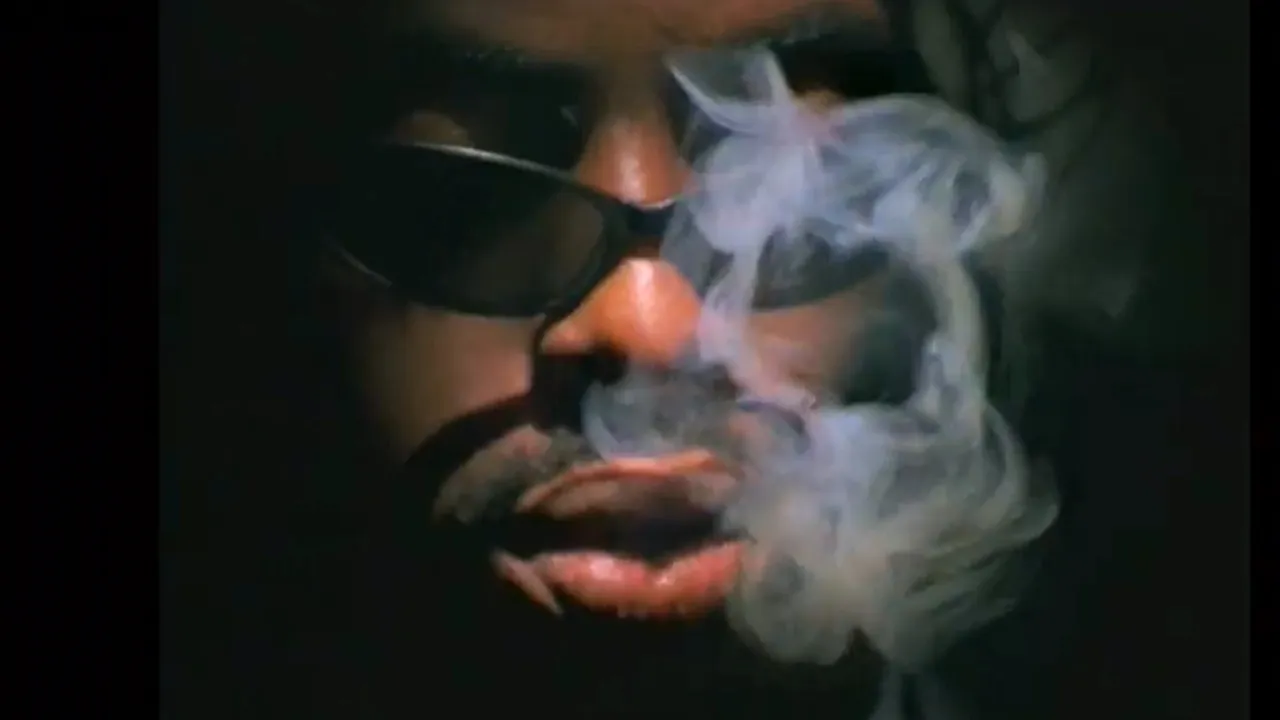
Fuqua’s vision was to create a direct visual link between the song and the movie's star. He specifically wanted Pfeiffer in the video to elevate it beyond a standard soundtrack tie-in. The most memorable scenes feature Coolio sitting across a table from Pfeiffer, their intense face-off creating a powerful visual tension that mirrored the song's themes. Coolio later admitted his own initial vision for the video was more "hood," with low-riders and other street visuals, but he trusted Fuqua's direction and was ultimately thrilled with the result.
Pfeiffer's appearance was a major coup. Her interactions with Coolio in the video are brief but powerful. She recalled him being "nothing but gracious" during the shoot. Coolio noted that their on-set conversation was minimal; Pfeiffer, who had recently had twins, was focused on her work and her family. She came in, delivered a compelling performance in just a couple of takes, and left. Her presence gave the video a level of cinematic gravity that helped it win Best Rap Video at the MTV Video Music Awards. To this day, the image of Coolio and Pfeiffer locked in a silent, smoky-room confrontation is one of the most enduring visuals of 90s pop culture.
Its Lasting Legacy
"Gangsta's Paradise" was more than just a hit; it was a landmark moment for hip-hop. It became the first rap single to be the top-selling song of the year on the Billboard Hot 100. The song's success demonstrated that rap music could address serious, socially conscious themes and still achieve massive mainstream appeal. It crossed genre and demographic lines, blending elements of soul, funk, and orchestral music with Coolio's stark lyrical realism.

The song's impact was global, topping charts in over a dozen countries. It won a Grammy Award for Best Rap Solo Performance in 1996 and has been certified multi-platinum. Its influence can be seen in the way it paved the way for other hip-hop artists to broach serious subjects on a mainstream stage. The track’s somber, realistic critique of street life became a touchstone for the genre.
Over the past three decades, "Gangsta's Paradise" has remained a fixture in popular culture. It has been covered by artists across different genres and famously parodied by "Weird Al" Yankovic as "Amish Paradise," which initially sparked a feud with Coolio, though the two later reconciled. The song continues to be featured in movies and television shows, introducing its powerful message to new generations. For many, it was the first hip-hop song they ever heard or were allowed to buy. It proved that a song could be dark, thoughtful, and commercially successful all at once, cementing its place as one of the most important tracks of the 1990s.
Conclusion
"Gangsta's Paradise" wasn't just a chart-topper; it was a cultural moment. It brought a raw, introspective look at street life into the mainstream, all set to a hauntingly familiar Stevie Wonder melody. By blending cinematic drama with real-world commentary, the song, its unforgettable video, and the movie Dangerous Minds created a perfect storm of 90s pop culture. Three decades later, it remains a powerful piece of music, a time capsule of a specific era, and a testament to how a single track can define a year.
This song is pure 1995. What memory does it instantly bring back for you? Tell us in the comments
上一篇
Remembering the Beanie Babies Frenzy: How a $5 Toy Took Over the 90s
下一篇
20 TV Theme Songs From the 90s You Can Still Sing by Heart
Loading...


.jpeg?table=block&id=281b5dc8-d074-8091-af61-d532a267112f&t=281b5dc8-d074-8091-af61-d532a267112f)

