

type
status
date
category
slug
summary
Pinterest Topic
Pinterest Tag
Latest Pin Date
Latest Pin No.
Pin Image
Total Pin Images
All Pins Posted
All Pin Images Created
tags
icon
password
comment
The air in the 80s and 90s? It tasted different, right? Thick with that sharp, ozone crackle from CRT TVs that took five minutes to warm up, and the low hum of tech companies just… guessing. Guessing at what gaming could be. This wasn’t the polished, focus-grouped era we live in now. Back then, console makers and tinkerers weren’t just chasing better graphics—they wanted to yank you through the screen. To make you be in the game, not just poke at it.
And for every console that stuck around (NES, Genesis—we see you), there were a dozen weird, wonderful, wildly broken peripherals. Things that promised revolution but delivered mostly confusion… and stories you still tell at family gatherings. This isn’t a eulogy for bad tech. It’s a toast. To the gadgets that reached too far, that tried to touch the future before the future was ready. To the stuff that ended up in a closet, but never really left our memories. Let’s dive into the strangest hardware that ever sat on a shag carpet.
The Nintendo Power Glove: “It’s So Bad”
If we’re talking gloriously flawed gaming gear, the Power Glove is the king. It wasn’t just a controller—it was a moment. Black, bulky, strapped to your arm like something out of a sci-fi B-movie. You remember Lucas Barton from The Wizard (1989)? That cool, slightly villainous kid who growled, “I love the Power Glove. It’s so bad”? Back then, “bad” meant awesome. Irony’s a jerk, though—decades later, that line hits way more literal.

The Promise
Marketing sold this thing as the end of buttons. Mattel said it’d unshackle you from the D-pad—control games with a finger flick, a wave of the hand. Imagine throwing a real punch in Mike Tyson’s Punch-Out!! Or steering a race car by gripping thin air. The commercials? Kids moved like pros, their on-screen characters copying every gesture perfectly. For the first time, we thought: This is it. I’m not playing—I’m inside.
I begged my parents for one for months. Christmas morning? I tore that box open so fast the wrapping paper stuck to my fingers. It felt powerful just holding it. Like I was part of the future. And I wasn’t alone—those gloves flew off shelves. Everyone wanted in.

The Reality
Then I plugged it in.
First, setup. You had to stick these clunky sensors around your TV—an L-shaped mess that was supposed to track the glove in 3D space. Then calibration: point, hold, wait… and repeat. Because it never quite took. My dad stood there with me for 20 minutes, muttering about “stupid tech,” while I tried not to cry.
And the controls? Nightmare. A tiny wrist twitch sent Mario careening into a pit. A full-on punch? Nothing. Crickets. Turns out, the Power Glove was based on the DataGlove—fancy, expensive gear used for robotics and VR. To sell it for under $80, they swapped all the good parts for cheap ones. It looked the part, but it couldn’t do the simplest thing.

Only two games even tried to use it: Super Glove Ball and Bad Street Brawler. Spoiler: both sucked. For every other NES game? You had to type codes into a keypad on the glove’s forearm. That’s right—typing codes to play Super Mario Bros. It was like doing taxes just to jump.
Less than a year later, it was gone. Shelved. Forgotten by everyone but the kids who’d begged for it.
Verdict
The Power Glove is a beautiful disaster. It failed as a controller, but man, did it capture our imaginations. It was a glitchy peek at the future—one that the Wii Remote and VR would finally get right decades later. We don’t love it for what it did. We love it for what it tried to do. It was so, so bad. And we ate that up.
The Sega Activator: The Full-Body Flail
Nintendo had hubris in a glove. Sega? They looked at that and said, “Hold my soda. Let’s do the whole body.” The Sega Activator (1993) was an octagonal ring you plopped on the floor—supposedly turning your living room into a martial arts dojo. Commercials showed kids pulling off perfect kicks, their Eternal Champions characters mirroring every move. This wasn’t playing—it was becoming the game.

The Promise
Here’s the idea: the ring shoots infrared beams up to the ceiling. Stand in the middle, break the beams with your hands or feet, and boom—your character acts. High kick over a panel? High kick in the game. Punch left? Punch left. It was “full-body gaming” years before Kinect. And with fighting games blowing up back then? Sega thought they’d struck gold.
My neighbor had one. I’d peer through his window after school, watching the commercial on loop. “We have to try it,” I’d say. He’d nod, like we were about to test a rocket ship.

The Reality
Spoiler: we weren’t.
First, setup. The Activator was picky. Your living room had to be a sterile box—no sunlight, no furniture in the way, no carpet that was too shaggy. Otherwise, the infrared beams got confused. And it needed its own power brick—another wire tangled in the nest behind the TV. My neighbor’s mom hated it before we even turned it on.

Even in perfect conditions? It barely worked. Sensors missed moves half the time, mixed up the rest. Throw a punch? Your character jumps. Try a kick? They stand there, defenseless. The octagon had eight sections—really just mapped to a Genesis controller’s buttons. You weren’t doing martial arts. You were flailing at invisible buttons.
Game support? Laughable. Technically, it worked with any Genesis game—but only a handful (like Mortal Kombat) cared. Using it for Sonic the Hedgehog? A disaster. You’d wave your arms like a maniac, Sonic would run into spikes, and you’d want to throw the ring out the window.
It hit the bargain bin fast. My neighbor sold it at a garage sale for $5. I almost bought it… then thought better of it.

Verdict
The Activator is proof of the golden rule: just because you can, doesn’t mean you should. The idea was incredible—hamstrung by tech that couldn’t keep up. It was awkward. It was imprecise. It made you look like you were having a seizure in your living room. But man, that audacity? Endearing. Sega didn’t just want you to play—they wanted you to live it. Even if living it meant knocking over a lamp.
The Super Scope 6: The Bazooka of Broken Dreams
Nintendo’s NES Zapper? It worked. Simple, fun, Duck Hunt was a classic. So when they launched the SNES, they thought: “Go bigger. Way bigger.” Enter the Super Scope—a shoulder-mounted, bazooka-looking light gun that made the Zapper seem like a toy. Two feet long. Had a scope. Rested on your shoulder like you were about to fight aliens. It was absurd. And for a minute? It was cool.

The Promise
Wireless! (A big deal in 1992.) It connected to the SNES via an IR receiver on top of your TV. The ads showed kids with serious faces, blasting aliens with pinpoint accuracy. The pack-in game, Super Scope 6, had puzzles, whack-a-mole, missile defense—all to show how “versatile” it was. This was the future of light guns. The “super” accessory for a “super” console.
I got one for my 10th birthday. I put it on my shoulder and struck a pose. My mom took a photo. I still have it—grin like an idiot, bazooka digging into my collarbone.

The Reality
That grin faded fast. First, the weight. Holding that thing for 10 minutes? My shoulder ached so bad I had to prop it on a pillow. Then the batteries. Six AAs. Gone in four hours. My parents groaned every time I asked for more—“Those things cost money!” they’d say. I started hoarding batteries from remote controls.
Game support? Slim. Super Scope 6 was fine, but only a dozen games ever worked with it. A few gems—Yoshi’s Safari (the only Mario FPS ever!) and Battle Clash—but no Duck Hunt. No “must-have” game that made the $70 price tag worth it.
Worse? It only worked with CRT TVs. When flat-screens took over? That bazooka became a doorstop. My dad tried to use it as a Halloween prop once. It didn’t even work for that—too heavy to carry.

Verdict
Style over substance, through and through. It looked amazing. The idea of a shoulder-mounted gaming gun? Still cool. But the ache, the batteries, the lack of games? Doomed. It was a big, loud promise that fizzled out. A plastic bazooka that shot nothing but disappointment.
The U-Force: Don’t Touch. Seriously.
Broderbund’s U-Force (1989) had a tagline that stuck: “Don’t Touch.” Commercials showed people waving their hands in front of a foldable, laptop-like thing—no buttons, no sticks, just “power fields.” It sounded like magic. Gesture control! In 1989! We were all convinced this was the end of controllers.

The Promise
IR sensors in two panels tracked your hands—move closer, move farther, side to side, and the game followed. It came with accessories: a “Power Bar” for Punch-Out!!, a T-bar for Top Gun (like a fighter jet stick!). Fold it up, lay it flat—so versatile. The ads said it was “responsive,” “realistic.” I saw one at Toys “R” Us and stared at it for 20 minutes.

The Reality
That tagline? It was accidental advice. “Don’t Touch” should’ve been “Don’t Bother.”
The IR sensors were garbage. Inconsistent. Unresponsive. Half the time, you’d wave your hands like a lunatic in front of it, and the game would just… sit there. I borrowed one from a cousin. Tried to play Punch-Out!!—Little Mac stood still while Mike Tyson pummeled him. Tried Super Mario Bros.—Mario didn’t move an inch.
A few people said it worked “okay” with Rad Racer, but let’s be real—“okay” isn’t worth $100. Most kids got it for Christmas, played it for an hour, then hid it in the closet. My cousin gave his to me a month later. I used it as a laptop prop for my GI Joes. It was better at that.

Verdict
It’s overshadowed by the Power Glove, but it’s just as bad—maybe worse. Ranked as one of the worst controllers ever? Deserved. It was marketing magic with zero function. Promised revolution, delivered frustration. It told us not to touch it. We should’ve listened.
The Roll ‘n Rocker: The Unbalanced Board
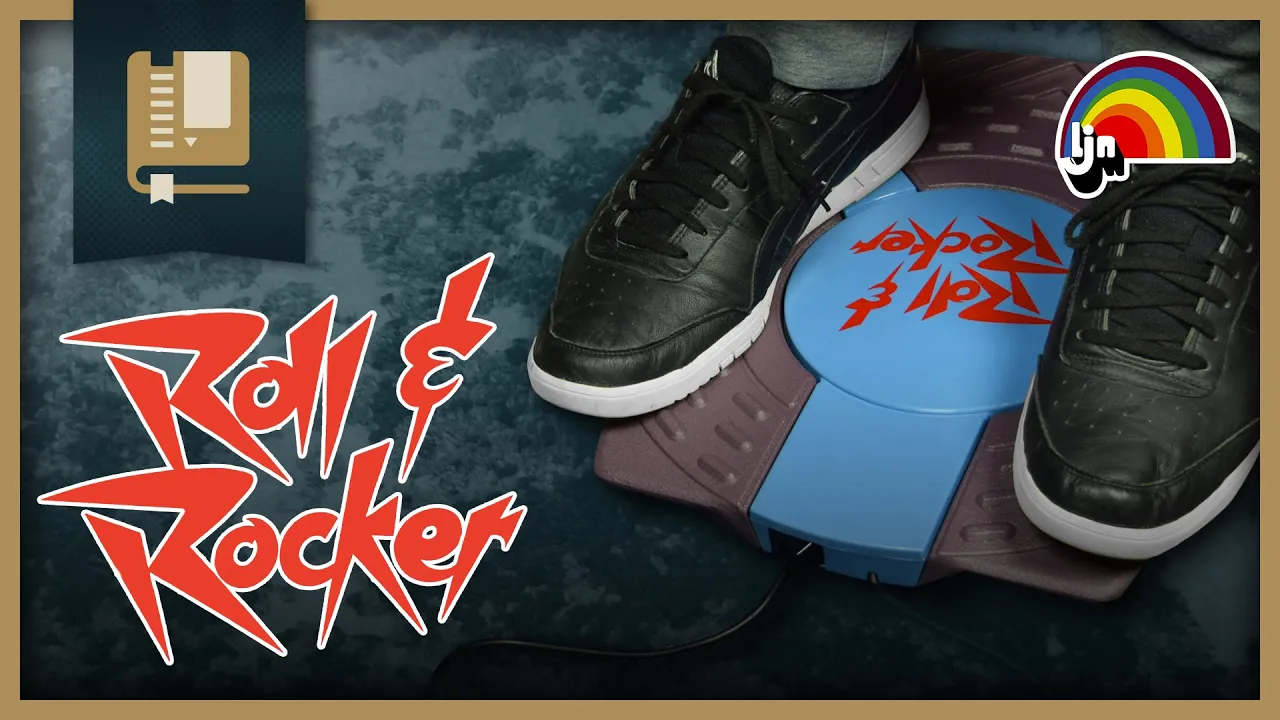
Long before the Wii Balance Board had us doing yoga in our socks, LJN (yes, that LJN—makers of some of the worst licensed games ever) made the Roll ‘n Rocker. A wobbly balance board for the NES. Stand on it, lean, control your character. Immersive! Physical! …In theory.

The Promise
It was a giant D-pad you stood on. Lean forward? Move up. Lean left? Move left. Ads said it turned “normal reflexes into high-speed action.” Intuitive! Fun! LJN even acted like it’d change how we played. Spoiler: LJN was wrong.
My friend’s older brother bought one. We were convinced it’d make us better at Metroid. Spoiler 2: It didn’t.
The Reality
First problem: it didn’t work. The tilt switches were so imprecise, plugging it in made games “flip out”—Samus would run in circles or freeze. Any game that needed precision? Impossible.
Second problem: the pointlessness. It only replaced the D-pad. You still had to hold a regular NES controller to jump, shoot, or pause. So you’re standing on a wobbly board, leaning like a flamingo, while clutching a controller. Why not just use the controller’s D-pad? We spent 10 minutes laughing at how stupid we looked before giving up.
It was flimsy, too. My friend’s brother stepped on it wrong once, and it creaked like it was gonna break. It ended up under his bed, buried under socks.
Verdict
One of the worst peripherals ever. Poorly thought out, poorly made, and totally useless—even for LJN. It didn’t make gaming better. It made it harder. A wobbly, stupid board that gave us nothing but eye-rolls and sore ankles.
The 80s and 90s weren’t perfect for gaming hardware. But man, they were brave. Companies took swings. They failed. They made us cry (and laugh) over gadgets that couldn’t do what they promised. But those failures? They mattered. They taught us what gaming could be. They gave us stories—“Remember when I begged for that Power Glove?” “Remember when we tried to use the Activator and knocked over Mom’s vase?”
These aren’t just bad gadgets. They’re pieces of our childhoods. Messy, frustrating, wonderful pieces.
This is just the tip of the weird iceberg, though. What’s the most bizarre gaming accessory you ever owned? Did you beg for it? Cry over it? Laugh about it later? Drop your story in the comments—I’m dying to hear.
上一篇
Deconstructing a Universe: The Genius of the DCAU
下一篇
The Sacred Text: A Deconstruction of the 90s Fall TV Preview
Loading...


.jpeg?table=block&id=281b5dc8-d074-8091-af61-d532a267112f&t=281b5dc8-d074-8091-af61-d532a267112f)

