

type
status
date
category
slug
summary
Pinterest Topic
Pinterest Tag
Latest Pin Date
Latest Pin No.
Pin Image
Total Pin Images
All Pins Posted
All Pin Images Created
tags
icon
password
comment

It’s a story that feels like it’s been with us forever, a piece of cinematic bedrock. A divided community boiling over in the summer heat, a high-stakes football season holding its breath, and two coaches who had to teach a group of angry, scared young men to become a team. Twenty-five years ago, c wasn't just a hit movie; it became an American classic, a cultural touchstone that felt both like a history lesson and a glimpse of our better selves. And a quarter-century later, its message doesn't feel dated. It feels urgent.

The film, released in the fall of 2000, captured the imagination of a country. It was more than just a sports movie; it was a parable about prejudice, friendship, and the hard, painful work of seeing the humanity in one another. Based on the true story of a newly integrated high school football team in Alexandria, Virginia, in 1971, the film's power was in its raw emotion, its unforgettable characters, and a Motown soundtrack that became the heartbeat of a generation's struggle and triumph. For many, it was the first time they’d seen the turmoil of the Civil Rights era portrayed not in a documentary, but in a story of teenagers who looked and felt like people they knew. It spoke a language of locker rooms and school hallways, of nervous glances and, eventually, unbreakable bonds. The echoes of Coach Boone’s whistle, the spectral lights of the Gettysburg battlefield, the soaring chorus of “Ain’t No Mountain High Enough”—these are more than just scenes. They are memories.
The True Story of the '71 Titans
The film opens with a potent truth: in 1971, Alexandria, Virginia, was a city wrestling with change. An order to desegregate the schools led to the consolidation of three high schools—George Washington, Hammond, and T.C. Williams—into one. This meant that for the first time, Black and white students would be walking the same halls and playing on the same teams. T.C. Williams would house all the juniors and seniors, creating a powder keg of racial tension in a community already simmering with it.

Into this fire walked Herman Boone, a Black head coach from North Carolina, appointed to lead the newly formed, integrated T.C. Williams Titans football team. This decision demoted the beloved and successful white coach of the former Hammond team, Bill Yoast, to assistant coach. As the film depicts, this move was met with outrage from the white community, a sentiment that placed an immense weight on Boone’s shoulders before he ever blew a whistle.
But this is where the polished gleam of Hollywood begins to diverge from the grainier texture of history. While the film portrays a city and a team ripped apart by a newly enforced integration, the reality was more complex. Alexandria's schools had officially begun desegregating years earlier, in 1965, though racial imbalances persisted. The consolidation in 1971 was a measure to further that process. The real players and coaches from that season often say that the intense racial animosity within the team was exaggerated for dramatic effect. Many of these young men, Black and white, were more concerned with earning a spot on the combined varsity squad than with the color of their teammates' skin.
That isn't to say the tension wasn't real. It was. The city was a place of subtle and overt racism, a community where a Black teenager had been killed just a year prior, sparking nights of riots. And Coach Boone did face hostility; a toilet was thrown through his window in real life, an incident softened to a brick for the Disney film. He did take his players to a training camp at Gettysburg, Pennsylvania, and used that hallowed ground to forge a sense of unity. He did force them to sit together, room together, and learn about each other until they saw beyond skin color.

The film’s most powerful friendship, between white team captain Gerry Bertier and Black defensive leader Julius Campbell, was also real. Their bond became a living symbol of the team's transformation, a defiant testament to the idea that brotherhood could be chosen, not just inherited. The movie takes liberties—the championship game was actually a blowout victory, not a last-second nail-biter, and Gerry Bertier’s tragic car accident, which left him paralyzed, occurred after the season had ended, not before the final game. Yet, these cinematic choices don’t betray the story; they amplify its emotional truth. The '71 Titans were not underdogs, as the film suggests. They were a powerhouse, going undefeated, shutting out nine of their 13 opponents, and winning the Virginia AAA state championship. They were dominant. But their true victory was not on the scoreboard. It was in the locker room, in the hallways, and in a town that, watching them, slowly began to change.
More Than a Game: A Lesson in Brotherhood
What makes Remember the Titans lodge itself so deep in our hearts isn't the football. It’s the aching, difficult, and ultimately beautiful journey from suspicion to love. It’s the moments between the plays that define the film. The story is built on the colossal performances of Denzel Washington as the demanding, unyielding Coach Boone and Will Patton as the quiet, honorable Coach Yoast. Theirs is a relationship that begins with resentment and mistrust. Boone, proud and fully aware of the tightrope he’s walking, refuses to be intimidated. Yoast, a man who stands to lose his career and his standing in the community, must decide between his pride and his principles.
Their evolution from rivals to allies, and finally to friends, is the film's backbone. We see it in the quiet nod of respect Yoast gives Boone when he sees his rigorous training methods working. We feel it when Yoast, seeing a referee about to make a biased call against his own team, declares he’ll expose the plot, sacrificing his nomination to the Hall of Fame to protect the integrity of the game and Boone’s job. It’s a moment of profound moral courage, where a man chooses to do the right thing, even at great personal cost.

This transformation ripples through the team. The Gettysburg speech is the turning point. Boone wakes the boys at 3 a.m. and runs them through the dark woods to the site of the Civil War’s most famous battle. Standing in the mist-shrouded dawn, he doesn’t talk about football. He talks about history. “Fifty thousand men died right here on this field, fighting the same fight that we are still fighting among ourselves today,” he tells them. “You take a lesson from the dead. If we don't come together, right here on this hallowed ground, we too will be destroyed.” It is there, in the quiet of a battlefield cemetery, that the Titans are truly born.
The heart of the team's story beats in the relationship between Gerry Bertier (Ryan Hurst) and Julius Campbell (Wood Harris). They start as antagonists, circling each other with undisguised hostility. Their confrontation in the gym—"I'm Julius," "I'm Gerry. We're on the same team now"—is layered with tension. But it’s their fight during practice, culminating in Gerry’s iconic "Left side! Strong side!" declaration, that finally breaks the dam of their prejudice. They learn to trust each other on the field, and that trust bleeds into their lives off of it.
The film is filled with these small, crucial moments of connection. There’s the goofy, oversized offensive lineman Louie Lastik (Ethan Suplee), who is the first to cross the racial divide, sitting with the Black players because he just loves “The Temptations.” There’s the long-haired California quarterback Ronnie "Sunshine" Bass (Kip Pardue), whose flamboyant personality and powerful arm shatter stereotypes on both sides. There is even the journey of Bertier’s girlfriend, Emma (Kate Bosworth), who initially refuses to shake Julius's hand but eventually cheers for him with genuine warmth. Each arc is a miniature version of the film's central theme: change is possible, one person at a time. And when Gerry is lying in a hospital bed, paralyzed, the first person he asks to see is Julius. “I was afraid of you, Julius,” he confesses. “I only saw what I was afraid of.” The moment his nurse, initially hesitant, tells his family, “He only wants to see his brother,” the film delivers its most powerful emotional punch. It shows us that family isn't just blood. It's the people who show up for you when everything falls apart.
The Unforgettable Motown Soundtrack
The soul of Remember the Titans is, quite literally, its soul music. The film's soundtrack is not just a collection of oldies; it is the emotional engine of the story, a vibrant tapestry of Motown, rock, and folk that perfectly captured the spirit of 1971. The music tells its own story of integration, as the sounds of Black and white artists of the era blend together to create a feeling of hope, struggle, and eventual celebration.
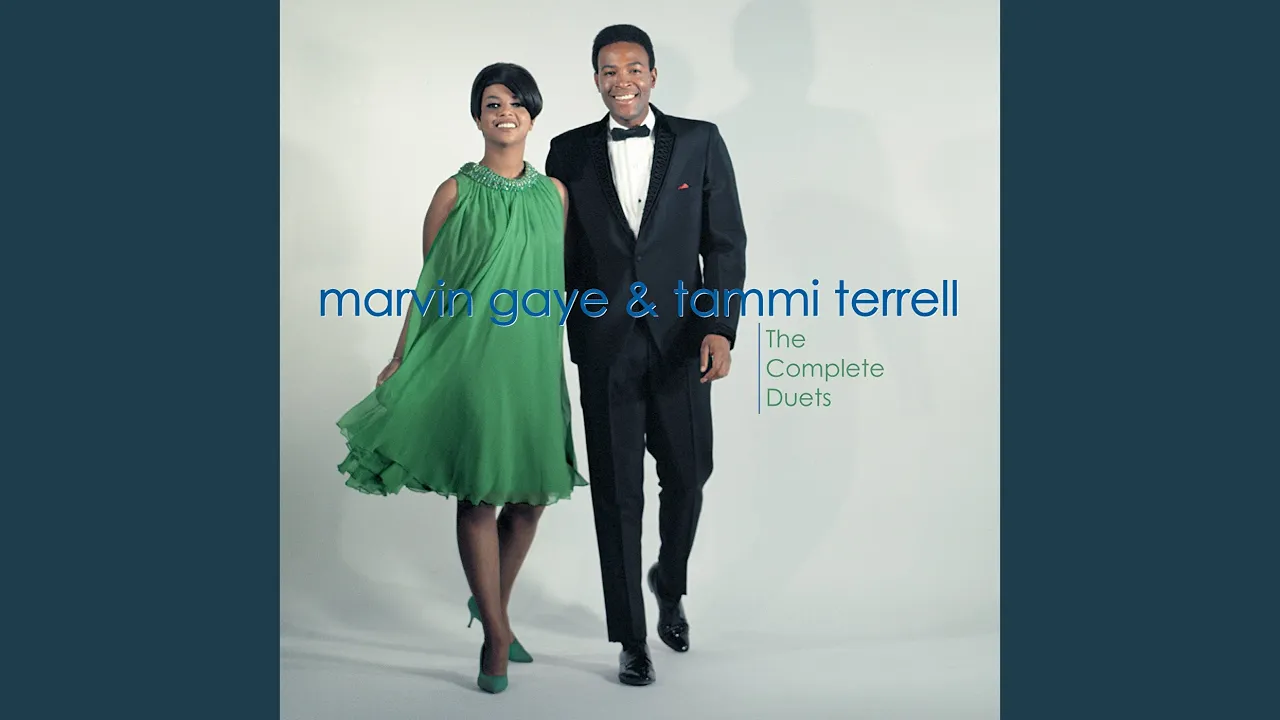
Songs are tied so inextricably to moments that hearing one instantly brings the scene to mind. When the newly-formed team first boards the buses for training camp, the mood is hostile and segregated. But then, we hear the opening notes of Marvin Gaye and Tammi Terrell’s “Ain’t No Mountain High Enough.” The song becomes an anthem of possibility, playing over a montage of the team’s grueling practices and their first tentative steps toward friendship. It’s the soundtrack to their transformation. By the end of the sequence, as they run back to the buses, the players are singing it together, their voices a joyous, unified chorus. The song isn't just playing in the background; it’s coming from them.


Each musical choice deepens the film's emotional impact. Norman Greenbaum’s "Spirit in the Sky" plays as the long-haired "Sunshine" arrives, a perfect introduction to his almost mythical presence. Creedence Clearwater Revival’s “Up Around the Bend” gives a jolt of rebellious energy to the team's on-field swagger. The powerful strumming of Cat Stevens’ “Peace Train” underscores a moment of fragile hope as the community begins to rally around the team.


And then there is the heartbreaking, defiant use of “Na Na Hey Hey Kiss Him Goodbye” by Steam. In the film’s closing moments, the team reunites ten years later for Gerry Bertier’s funeral. As they stand graveside, Julius begins to softly sing the opening melody of the song they sang to their defeated opponents. One by one, the other Titans join in. It’s a song of victory, but here it is transformed into a mournful, loving farewell to their captain, their brother. It is one of the most touching and emotionally complex moments in any sports film, a scene that perfectly captures the unbreakable bond they forged all those years ago.
Why We Still Remember the Titans
Twenty-five years on, the world has changed in countless ways, yet the central message of Remember the Titans feels more relevant than ever. The film continues to be shown in schools as a tool for teaching about the Civil Rights movement, teamwork, and racial harmony. Its themes of unity, respect, and perseverance are timeless. It remains a cultural touchstone because it does what great stories do: it gives us a model for how to be better. It shows us that our shared humanity can be stronger than the forces that try to tear us apart.
The movie presents a simplified, perhaps idealistic, version of racial reconciliation. But its power lies in that simplicity. It speaks a universal language. It reminds us that prejudice is learned, and therefore it can be unlearned. It reminds us that true leadership isn’t about power; it's about bringing people together to achieve a common goal. Denzel Washington’s Coach Boone is a monumental figure—tough, principled, and deeply human. He knew he wasn't just coaching football; he was shaping men.

The film endures because it gives us hope. It shows us a path forward, not through grand political gestures, but through small, personal acts of courage: sharing a meal, learning a new handshake, listening to a teammate’s music, standing up for a friend. It’s a story about the hard work of building a community, one difficult conversation and one shared victory at a time. The '71 Titans became a symbol for their city, and through this film, they became a symbol for the nation. They showed us what is possible when we stop seeing each other as Black or white, and start seeing each other as brothers.
Remember the Titans is full of powerful moments and unforgettable lines. What is your favorite scene or quote from this incredible film? Share it in the comments
上一篇
How a Band from Aberdeen Changed the World: Remembering Nirvana's 'Nevermind'
下一篇
It's Thinking: A Look Back at the Sega Dreamcast, the Console That Dared to Dream
Loading...


.jpeg?table=block&id=281b5dc8-d074-8091-af61-d532a267112f&t=281b5dc8-d074-8091-af61-d532a267112f)

